Can Laparoscopic Surgery Improve Fertility? What Every Woman Should Know
Medicine Made Simple Summary
Laparoscopic surgery is a minimally invasive procedure that helps doctors diagnose and treat certain fertility problems. It is commonly used for conditions like endometriosis, fibroids, ovarian cysts, blocked fallopian tubes, and pelvic adhesions that may affect pregnancy chances. Many women worry when surgery is suggested, but laparoscopy often helps improve fertility while avoiding large cuts and long recovery times. Not every woman trying to conceive needs laparoscopy, but in the right cases, it can be an important step toward pregnancy and better reproductive health.
Understanding Fertility Problems and Why Surgery May Be Needed
Many couples trying for pregnancy expect it to happen naturally within a few months. When it does not, stress and confusion begin. Some fertility problems can be managed with medicines, but others involve physical issues inside the reproductive organs that medicines alone cannot fix.
For pregnancy to happen, the ovaries must release healthy eggs, the fallopian tubes must be open, sperm must reach the egg, and the uterus must support implantation. If there is a blockage, scar tissue, abnormal growth, or damage inside the pelvis, pregnancy may become difficult. Understanding female infertility causes such as hormonal imbalance, structural problems, or inflammation helps doctors decide the most appropriate path forward.
This is where laparos
This is where laparoscopic surgery may help.
It allows doctors to directly look inside the abdomen and pelvis and treat many fertility-related problems at the same time.
This makes it both a diagnostic and treatment procedure.
What Is Laparoscopic Surgery?
Laparoscopic surgery is also called keyhole surgery or minimally invasive surgery.
Instead of making one large cut, the surgeon makes a few very small cuts in the abdomen. A thin camera called a laparoscope is inserted through one opening, and small surgical instruments are inserted through the others.
The camera shows a clear view of the uterus, ovaries, fallopian tubes, and surrounding pelvic organs on a screen.
This helps the doctor identify problems that may not always be visible on ultrasound.
Because the cuts are small, recovery is usually faster and less painful compared to open surgery.
Most women can return home within a day or two.
When Is Laparoscopy Recommended for Fertility?
Not every woman trying to conceive needs laparoscopic surgery.
Doctors usually recommend it when there is a strong reason to suspect a physical problem inside the pelvis.
Common reasons include:
- Severe period pain
- Pain during intercourse
- Suspected endometriosis
- Ovarian cysts
- Fibroids affecting fertility
- Blocked fallopian tubes
- Previous pelvic infection
- History of pelvic tuberculosis
- Repeated miscarriages in selected cases
- Unexplained infertility after basic tests
If scans and symptoms suggest a structural problem, laparoscopy helps confirm the diagnosis and often treat it immediately.
How Laparoscopy Helps in Endometriosis
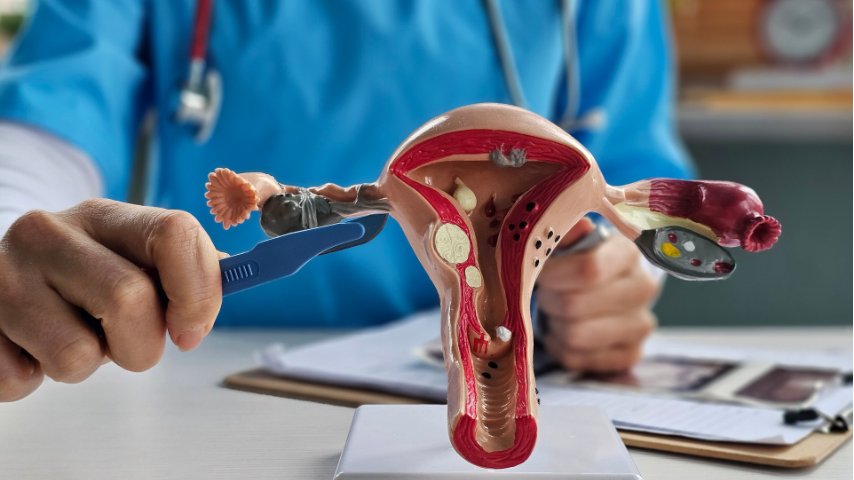
Endometriosis and fertility are closely connected, making it one of the most common reasons laparoscopy is advised in fertility care.
In this condition, tissue similar to the uterine lining grows outside the uterus. It may affect the ovaries, fallopian tubes, bladder, or surrounding pelvic areas.
This can cause:
- Painful periods
- Chronic pelvic pain
- Pain during intercourse
- Difficulty getting pregnant
Endometriosis causes inflammation and scar tissue, which may affect ovulation, egg quality, and tube function.
Laparoscopic surgery helps by removing or burning these abnormal tissue areas.
It can also release adhesions and improve the normal movement of reproductive organs.
For many women, this improves both pain and fertility outcomes.
Can Laparoscopy Help with Blocked Fallopian Tubes?
Yes, in selected cases.
The fallopian tubes are where the egg and sperm usually meet. If the tubes are blocked, natural pregnancy becomes difficult.
Blockage may happen because of:
- Previous pelvic infection
- Endometriosis
- Pelvic surgery
- Tuberculosis
- Inflammation from past infections
During laparoscopy, doctors may perform dye testing to check if the tubes are open.
This is called chromopertubation.
If mild blockage or scar tissue is found, the surgeon may be able to correct it during the same procedure.
However, if the tubes are severely damaged, IVF may still be the better option.
Laparoscopy for Fibroids and Fertility
Fibroids are non-cancerous growths in or around the uterus.
Not all fibroids affect fertility, but some can interfere with pregnancy depending on their size and location.
Fibroids may:
- Distort the uterus
- Block fallopian tubes
- Affect implantation
- Increase miscarriage risk in some cases
Laparoscopic surgery may be used to remove fibroids, especially if they are affecting fertility or causing heavy bleeding and pain.
This procedure is called laparoscopic myomectomy.
Removing the right fibroid can improve pregnancy chances in carefully selected women.
Laparoscopy for Ovarian Cysts
Some ovarian cysts can affect fertility, especially when linked to endometriosis or hormone imbalance.
Endometriomas, also called chocolate cysts, are commonly seen in women with endometriosis.
These cysts may:
- Cause pain
- Affect egg quality
- Disturb ovulation
- Make fertility treatment more difficult
Laparoscopic surgery may help remove these cysts while preserving as much healthy ovarian tissue as possible.
This decision must be made carefully because surgery should improve fertility, not reduce ovarian reserve unnecessarily.
Laparoscopy for Pelvic Adhesions
Adhesions are internal scar tissues that can develop after infections, surgery, endometriosis, or inflammation.
These adhesions may pull reproductive organs out of their normal position.
This can affect:
- Egg release
- Tube movement
- Fertilization
- Implantation
Laparoscopic surgery can gently remove these adhesions and restore normal pelvic anatomy.
This may improve the chances of natural conception.
Does Laparoscopy Improve Pregnancy Chances?
Yes, but only when the underlying problem is one that surgery can actually fix.
Laparoscopy is not a magic solution for every fertility issue.
It works best when the problem involves:
- Endometriosis
- Tubal disease
- Pelvic adhesions
- Fertility-related fibroids
- Selected ovarian cysts
If infertility is mainly due to poor egg quality, low ovarian reserve, severe male factor infertility, or age-related decline, laparoscopy may not provide major benefit.
This is why proper diagnosis before surgery is very important.
The goal is always the right treatment, not unnecessary procedures.
What Happens Before Laparoscopic Surgery?
Before surgery, your doctor will usually perform basic fertility tests first.
These may include:
- Hormone blood tests
- Ultrasound scan
- Semen analysis of the male partner
- Ovulation tracking
- Thyroid and sugar testing
- HSG test for tube evaluation
If these tests suggest a structural issue, laparoscopy may be recommended.
The doctor will explain:
- Why surgery is needed
- What they are looking for
- Possible findings
- Risks and benefits
- Recovery expectations
This helps patients make informed decisions without fear.
Is Laparoscopic Surgery Painful?
Most women worry about pain when surgery is mentioned.
Laparoscopic surgery is done under general anesthesia, so you are asleep during the procedure.
After surgery, mild pain, gas discomfort, bloating, or shoulder pain may happen for a few days because of the gas used during the procedure.
Most women describe the recovery as much easier than expected.
Compared to open surgery, laparoscopy usually means:
- Smaller cuts
- Less pain
- Shorter hospital stay
- Faster return to normal life
- Less visible scarring
Recovery often takes a few days to two weeks depending on the procedure done.
Are There Any Risks?
Like all surgeries, laparoscopy has some risks, but serious complications are uncommon when done by experienced surgeons.
Possible risks include:
- Bleeding
- Infection
- Injury to nearby organs
- Reaction to anesthesia
- Scar tissue formation
- Rare need for open surgery conversion
Your doctor will explain these clearly before the procedure.
In most cases, the benefits outweigh the risks when surgery is properly indicated.
Does Everyone Need Laparoscopy Before IVF?
No.
This is a common misunderstanding.
Not every woman needs laparoscopy before IVF treatment.
If scans and reports clearly show that IVF is the best next step, surgery may not be necessary.
For example:
- Severe male factor infertility
- Very low ovarian reserve
- Advanced maternal age
- Severely damaged fallopian tubes
In these situations, IVF may be more helpful than surgery.
Laparoscopy is recommended only when it can improve the chances of natural pregnancy or make fertility treatment more successful.
Emotional Stress Around Fertility Surgery
Hearing the word surgery can create fear.
Many women worry that surgery means their fertility problem is serious or that pregnancy may never happen naturally.
This fear is understandable.
But laparoscopic surgery is often a step toward answers, not bad news.
It helps doctors see the real problem and often treat it immediately.
Many women feel relief after finally understanding what is causing the delay.
Clear communication with your doctor helps reduce anxiety and improves confidence in decision-making.
When Should You Talk to a Fertility Specialist?
When to see a fertility specialist is a question many couples delay asking, but early consultation can make a significant difference in outcomes.
If you have been trying to conceive and also have symptoms like painful periods, pelvic pain, irregular cycles, or previous pelvic infections, it may be time to seek expert help.
Women above 35 should also avoid waiting too long.
A fertility specialist can decide whether medicines, monitoring, or laparoscopic surgery is the best next step.
Early diagnosis often means better results and simpler treatment.
Conclusion
If pregnancy is taking longer than expected and you have symptoms like painful periods, fibroids, ovarian cysts, or suspected endometriosis, do not ignore the signs.
Laparoscopic surgery may help diagnose and treat hidden fertility problems before they become bigger challenges.
A timely fertility consultation can give clarity, reduce stress, and guide you toward the right treatment.
Speak to a fertility specialist and take the next step with confidence.
References and Sources
World Health Organization – Infertility
American Society for Reproductive Medicine
American College of Obstetricians and Gynecologists
Mayo Clinic – Female Infertility
NHS – Endometriosis and Fertility
Centers for Disease Control and Prevention – Reproductive Health