Understanding Blood Sugar: A Simple Guide for Parents of Children with Diabetes
Medicine Made Simple Summary
Blood sugar, also called blood glucose, is the body's primary source of energy. It comes from the food we eat and is carried through the bloodstream to cells throughout the body. Insulin, a hormone produced by the pancreas, helps glucose enter these cells where it can be used for energy. In children with diabetes, this process does not work properly, causing blood sugar levels to rise or fall outside the healthy range. Regular blood sugar monitoring helps families understand how food, insulin, exercise, illness, sleep, and growth affect glucose levels, allowing safer and more effective diabetes management.
Why Blood Sugar Suddenly Becomes So Important After a Diabetes Diagnosis
For most parents, blood sugar is not something they think about regularly until their child is diagnosed with diabetes.
After diagnosis, however, blood sugar numbers seem to become part of everyday life. Parents find themselves checking glucose readings before meals, after meals, before sports, at bedtime, and sometimes even during the night. A number that was once unfamiliar suddenly influences decisions about food, insulin, physical activity, school routines, and travel plans.
This can feel overwhelming in the beginning. Many parents worry that they need to understand every glucose reading immediately or that a high or low number means they have done something wrong. The reality is much simpler. Blood sugar monitoring is not about achieving perfection. It is about understanding how your child's body responds to different situations and using that information to make informed decisions.
The more parents understand blood sugar, the more confident they become in managing diabetes and helping their child live a healthy, active life.
What Exactly Is Blood Sugar?
Every cell in the body needs energy to function. Whether a child is running on a playground, solving a maths problem, reading a book, or sleeping, their body requires a constant supply of fuel.
That fuel comes primarily from glucose.
Glucose is a type of sugar produced when the body digests carbohydrates from foods such as rice, chapati, bread, fruits, milk, cereals, and pasta. Once these foods are digested, glucose enters the bloodstream and becomes available for the body's cells to use as energy.
However, glucose cannot simply enter cells on its own. It needs help from insulin.
Insulin acts like a key that unlocks the cells and allows glucose to move from the bloodstream into the tissues where it is needed. When enough insulin is available and working properly, blood sugar remains within a healthy range and the body's cells receive the energy they need.
What Happens to Blood Sugar in Type 1 Diabetes?
In Type 1 Diabetes, the immune system mistakenly attacks the insulin-producing cells in the pancreas. Over time, the pancreas produces little or no insulin.
Without insulin, glucose remains trapped in the bloodstream instead of entering the body's cells. As a result, blood sugar levels rise while the cells struggle to access the energy they need.
This explains why children with undiagnosed Type 1 Diabetes often develop symptoms such as excessive thirst, frequent urination, weight loss, fatigue, and increased hunger. The body has plenty of glucose in the bloodstream, but it cannot use that glucose effectively.
Because insulin production cannot be restored naturally, children with Type 1 Diabetes require lifelong insulin therapy to help regulate blood sugar levels.
Why Do Blood Sugar Levels Change Throughout the Day?
One of the first things parents notice is that blood sugar is not a fixed number.
A child's glucose reading before breakfast may be very different from the reading after lunch or before bedtime. This is completely normal. Blood sugar levels are influenced by many factors throughout the day.
Food is perhaps the most obvious factor. When carbohydrates are eaten, they are broken down into glucose, causing blood sugar levels to rise. Different foods affect blood sugar differently, and the amount eaten also plays a role.
Insulin has the opposite effect. It helps move glucose out of the bloodstream and into the cells, causing blood sugar levels to decrease.
Physical activity is another major influence. When muscles are active, they use glucose for energy. This often causes blood sugar levels to fall during or after exercise.
Illness, stress, excitement, poor sleep, growth spurts, and puberty can also affect blood sugar. This is why diabetes management is not simply about counting carbohydrates or administering insulin. It involves understanding how all these factors interact.
Understanding High Blood Sugar
High blood sugar, known medically as hyperglycemia, occurs when glucose levels rise above the target range recommended by the diabetes care team.
There are many reasons why this can happen. A child may eat more carbohydrates than expected, receive too little insulin, become ill, experience stress, or go through hormonal changes associated with growth and puberty.
Symptoms of high blood sugar may include increased thirst, frequent urination, fatigue, headaches, blurred vision, and difficulty concentrating.
Occasional high readings are a normal part of diabetes management. Every child with diabetes experiences them from time to time. What matters most is identifying patterns and making appropriate adjustments when necessary.
Persistently elevated blood sugar levels should be discussed with the child's paediatric endocrinologist because long-term exposure to high glucose levels can increase the risk of complications.
Understanding Low Blood Sugar
Low blood sugar, known as hypoglycemia, occurs when glucose levels fall below the target range.
This can happen if a child receives more insulin than needed, delays a meal, eats less than expected, or participates in unusually intense physical activity.
Low blood sugar often develops quickly and may produce symptoms such as shakiness, sweating, hunger, dizziness, irritability, difficulty concentrating, or unusual behaviour.
In younger children, symptoms may be harder to recognize. Some children simply become quiet, clingy, emotional, or unusually tired.
One of the most important skills families learn after diagnosis is how to recognize and treat low blood sugar promptly. With experience, both parents and children become increasingly confident in identifying early warning signs.
Why Blood Sugar Monitoring Is So Important
Imagine trying to drive a car without being able to see the speedometer or fuel gauge. It would be extremely difficult to make safe decisions.
Blood sugar monitoring serves a similar purpose in diabetes management.
It provides information that helps families understand what is happening inside the body. Monitoring helps answer questions such as:
- Is the insulin dose working as expected?
- How is a particular meal affecting blood sugar?
- Is exercise causing glucose levels to drop?
- Is illness affecting diabetes control?
- Are adjustments needed in the treatment plan?
Without monitoring, families would have to make important decisions without enough information.
Finger-Prick Testing: The Traditional Approach
For many years, finger-prick testing was the primary method of monitoring blood sugar.
A small drop of blood is obtained from the fingertip and placed on a test strip inserted into a glucose meter. Within seconds, the device displays the current blood sugar reading.
Finger-prick testing remains an effective and reliable method. However, it only provides information about a single moment in time.
A reading of 140 mg/dL tells you what the blood sugar is now, but it does not tell you whether it is rising, falling, or remaining stable.
This limitation led to one of the most important advances in diabetes care.
How Continuous Glucose Monitoring Has Changed Diabetes Management
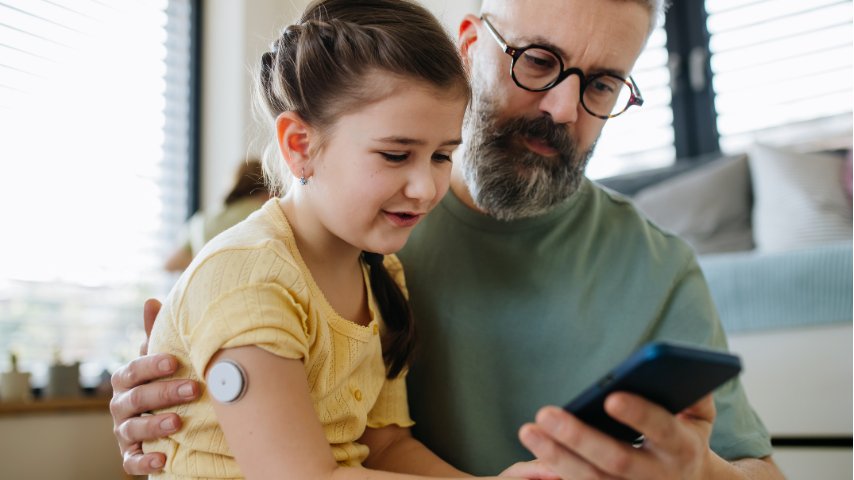
Continuous Glucose Monitoring, often called CGM, allows families to see blood sugar trends throughout the day and night.
A small sensor placed under the skin measures glucose levels continuously and sends information to a smartphone, receiver, or insulin pump.
Instead of seeing only individual readings, families can see whether glucose levels are increasing, decreasing, or remaining stable.
Many CGM systems also provide alerts when blood sugar is becoming too high or too low. This allows families to respond before symptoms develop.
For many parents, especially those of younger children, CGM technology provides significant reassurance and peace of mind.
What Is HbA1c and Why Does Your Doctor Discuss It?
Parents are often familiar with daily glucose readings but may be less familiar with HbA1c.
HbA1c is a laboratory test that reflects average blood sugar levels over approximately two to three months.
Unlike a finger-prick test or CGM reading, which shows glucose at a specific moment, HbA1c provides a broader picture of diabetes management over time.
Many parents think of HbA1c as a school report card. Daily glucose readings are individual assignments, while HbA1c reflects overall performance across several months.
Both types of information are important.
Why Blood Sugar Targets Are Different for Every Child
Parents often search for a single "normal" blood sugar number.
In reality, target ranges vary.
A toddler, school-age child, and teenager may have different targets. Treatment plans, lifestyle factors, and individual health needs also influence recommendations.
This is why families should follow the personalized targets provided by their paediatric endocrinologist rather than comparing numbers with other children.
Diabetes management is highly individualized.
The Role of Food in Blood Sugar Management
Food is one of the most important influences on blood sugar.
Carbohydrates have the greatest impact because they are converted into glucose during digestion.
However, not all carbohydrates affect blood sugar in the same way.
Some foods raise glucose quickly, while others produce a slower, more gradual increase.
Learning how different foods affect blood sugar takes time and experience. Families often discover patterns unique to their child.
The goal is not to eliminate carbohydrates. Children need carbohydrates for growth, development, and energy. The goal is to balance food intake with insulin and activity levels.
How Exercise Affects Blood Sugar
Physical activity is one of the healthiest habits children can develop.
Exercise improves cardiovascular health, strengthens muscles and bones, supports mental wellbeing, and helps with blood sugar management.
However, exercise can affect glucose levels in different ways.
Many activities cause blood sugar to fall because muscles use glucose as fuel. Some high-intensity activities may temporarily increase blood sugar because the body releases stress hormones.
Over time, families learn how specific sports and activities affect their child's glucose levels and make appropriate adjustments.
Helping Children Understand Their Blood Sugar
As children grow older, they benefit from learning about blood sugar themselves.
Education helps children understand why monitoring is important and how food, insulin, and activity affect their bodies.
This knowledge builds confidence and gradually prepares children to take a more active role in their diabetes management.
Children who understand their condition often feel more empowered and less anxious.
Conclusion
Blood sugar is the body's primary source of energy, and understanding how it works is essential for managing diabetes. While glucose levels naturally rise and fall throughout the day, regular monitoring helps families understand how food, insulin, exercise, illness, growth, and everyday activities affect those changes.
Rather than focusing on individual numbers, successful diabetes management involves recognizing patterns, making informed decisions, and working closely with the diabetes care team. With knowledge, practice, and support, families quickly become more confident in managing blood sugar and helping their child live a healthy, active, and fulfilling life.
If your child has diabetes and you would like guidance on blood sugar monitoring, insulin management, nutrition planning, or diabetes technology, consult a paediatric endocrinologist. Understanding blood sugar is one of the most important steps toward building confidence and achieving long-term diabetes control.
References and Sources
International Society for Pediatric and Adolescent Diabetes (ISPAD)
American Diabetes Association (ADA)
Juvenile Diabetes Research Foundation (JDRF)
Centers for Disease Control and Prevention (CDC)
National Institute of Diabetes and Digestive and Kidney Diseases (NIDDK)