How Medical Thoracoscopy Helps With Repeated Chest Fluid and Trapped Lung
Medicine Made Simple Summary
Some patients develop chest fluid that keeps returning even after repeated drainage. Others are told their lung is “trapped” and cannot expand fully. Both problems are often caused by scar tissue inside the chest that blocks fluid drainage and restricts lung movement. Simple needle drainage or chest tubes may not solve this. Thoracoscopy for Loculated Pleural Effusion allows doctors to look inside the chest, remove trapped fluid, and release scar tissue bands so the lung can expand again. This guide explains in simple language why these problems happen and how thoracoscopy provides a lasting solution.
Many patients feel hopeful after their first chest fluid drainage. Breathing improves. Discomfort reduces. But then breathlessness returns. Another scan shows fluid is back. Another drainage is done. After a few cycles, frustration builds. Patients ask why the fluid keeps coming back. They wonder if the treatment is failing. They worry something serious is being missed.
Others are told that their lung is trapped. They hear that even after fluid removal, the lung cannot expand fully. This sounds frightening when not explained clearly.
In reality, these two problems often share the same cause. Scar tissue inside the chest changes how fluid and lungs behave. Understanding this makes the role of Medical Thoracoscopy vs VATS very clear.
Understanding How the Pleural Space Normally Works
The lungs sit inside the chest surrounded by a thin lining called the pleura. One pleural layer covers the lung. The other lines the chest wall. Between them is a narrow space containing a tiny amount of fluid. This fluid allows the lungs to glide smoothly while breathing.
In a healthy chest, this space is open and flexible. Fluid can move freely. The lung expands fully with each breath.
When disease affects this space, fluid may collect. This is pleural effusion. If the pleural space remains open, fluid drainage is usually simple.
Problems begin when inflammation or infection causes scarring.
Why Chest Fluid Sometimes Keeps Returning
Pleural effusion can return for two main reasons.
The first reason is ongoing disease. Cancer, tuberculosis, heart failure, or chronic infections can continue producing fluid. In these cases, treating the main disease is essential.
The second reason is structural change inside the chest. When pleural inflammation lasts for some time, the body heals by forming fibrous tissue. This fibrous tissue becomes pleural adhesions. These adhesions divide the pleural space into compartments.
When fluid forms inside a compartment, it cannot flow freely to a drainage tube placed elsewhere. Even after drainage, hidden pockets of fluid remain. Over time, these pockets refill and symptoms return.
This is why repeated drainage sometimes provides only short-term relief.
What a Trapped Lung Means
A trapped lung happens when thick pleural adhesions hold the lung against the chest wall in a restricted position. Even when fluid is drained, the lung cannot expand to fill the chest cavity.
Patients with trapped lung often feel persistent breathlessness even after chest fluid removal. Doctors may notice that the lung remains partially collapsed on scans despite drainage.
This is not a weakness of the lung itself. It is a mechanical restriction caused by scar tissue. No amount of simple drainage can fix this mechanical problem.
The restriction must be released for the lung to move freely again.
Why Chest Tubes Alone May Not Solve the Problem
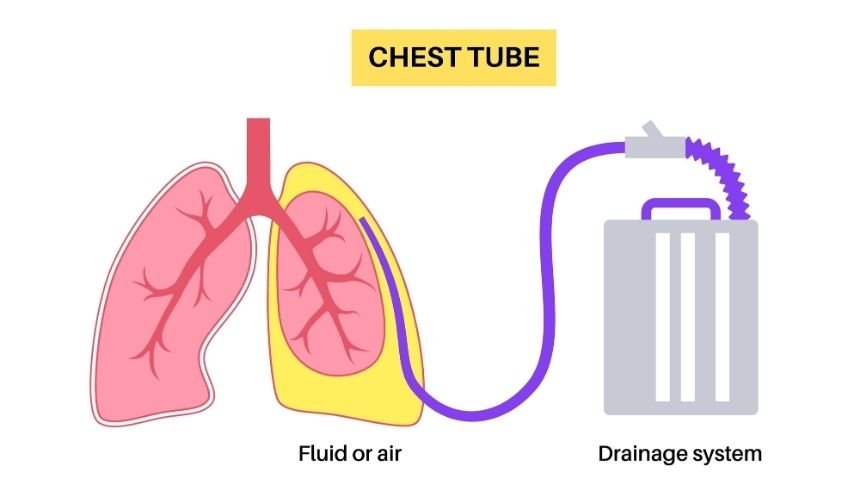
Chest tubes work well when fluid flows freely. But when adhesions create compartments, tubes only drain the pocket they are placed in. Other pockets stay untouched.
Doctors may try changing tube position or adding medicines to break internal walls. Sometimes this helps. But when adhesions are thick and established, these methods are often not enough.
At this stage, direct visual access to the pleural space becomes necessary. This is the role of medical thoracoscopy.
What Makes Medical Thoracoscopy Different
Medical thoracoscopy uses a small camera inserted through a tiny incision between the ribs. This camera shows the pleural space directly on a screen.
Doctors can now see fluid pockets, scar bands, and lung restriction in real time. They are no longer guessing based on scans alone.
Through the same small opening, instruments are used to suction trapped fluid and gently cut scar bands. This process is called adhesiolysis.
By removing both trapped fluid and adhesions, thoracoscopy solves the root mechanical problem rather than just treating symptoms.
How Thoracoscopy Frees a Trapped Lung
During thoracoscopy, the doctor carefully examines how the lung is attached to the chest wall. Scar bands that tether the lung are identified.
Using delicate instruments, these bands are released under direct camera vision. Once released, the lung can gradually expand back toward its natural position.
A chest tube is placed afterward to help maintain expansion while healing occurs. Over the next days, the lung adapts to its restored movement.
Many patients notice improved breathing soon after this step.
Why Thoracoscopy Reduces Repeated Fluid Return
When adhesions are removed, the pleural space becomes open again. Fluid that forms in the future can move freely and drain normally.
In many cases, doctors also perform pleurodesis during thoracoscopy if fluid recurrence risk is high. This procedure gently sticks the pleural layers together in a controlled way to prevent future fluid buildup.
By combining fluid drainage, adhesion release, and optional pleurodesis, thoracoscopy offers a long-term solution rather than repeated temporary relief.
What Patients Experience During the Procedure
Medical thoracoscopy is usually done under local anesthesia with sedation. The chest wall is numbed. The patient remains sleepy and relaxed.
Most patients feel pressure or movement but not sharp pain. Breathing is monitored throughout. The procedure typically lasts less than an hour.
After completion, a chest tube is placed and the small incision is closed with simple stitches.
Hospital Stay After Thoracoscopy
Most patients stay in the hospital for one to three days. Nurses monitor breathing, chest tube output, and pain levels.
Breathing exercises begin early. Gentle walking starts soon after. Pain is usually mild and controlled with tablets.
Once the lung remains expanded and drainage reduces, the chest tube is removed and discharge is planned. This phase is described in detail under Adhesiolysis via Medical Thoracoscopy Thoracoscopy Recovery.
Breathing Improvement After Treatment
Patients often describe the most noticeable change as easier breathing. Many say they did not realize how restricted their lungs were until they felt the difference after adhesiolysis.
Activities such as walking, climbing stairs, or even lying flat become easier. This improvement continues over the following weeks as the lung fully adjusts.
Emotional Relief After a Long Treatment Journey
Patients who have undergone repeated drainage procedures often feel frustrated and exhausted by frequent hospital visits.
Thoracoscopy usually brings emotional relief because it provides clear answers and a mechanical solution. Knowing why fluid kept returning and seeing improvement restores confidence in the treatment process.
Safety of Thoracoscopy for This Condition
Medical thoracoscopy is a well-established pleural procedure. Complications are uncommon when performed by trained teams.
Possible issues include temporary air leak, mild bleeding, infection, or short fever. These are monitored closely in hospital and managed promptly.
Doctors recommend thoracoscopy only when benefits clearly outweigh risks.
Why Early Intervention Matters
Long-standing adhesions can become thicker and harder to release. Long-term trapped lung can lead to permanent lung stiffness.
Early referral for thoracoscopy when repeated drainage fails improves outcomes and recovery.
Conclusion
If you or a loved one has chest fluid that keeps returning or has been told the lung is trapped, ask your doctor whether pleural adhesions may be the cause. Understanding how medical thoracoscopy can release trapped lung and stop repeated fluid buildup can change your treatment journey. Book a consultation with an interventional pulmonology or thoracic specialist to explore long-term solutions.
References and Sources
American Thoracic Society – Pleural Effusion and Pleural Procedures
British Thoracic Society – Pleural Disease Guidelines
European Respiratory Society – Pleural Space Disorders
National Cancer Institute – Pleural Conditions and Treatments