Why Is My Neck Swelling Getting Bigger? Could It Be a Goiter?
Medicine made simple summary
Thyroid Artery Embolization (TAE) is a non-surgical procedure used to reduce the size of an enlarged thyroid gland, also called a goiter. Instead of removing the gland, doctors reduce its blood supply using a thin tube inserted through a blood vessel in the wrist or groin. Tiny particles are released to block blood flow to the enlarged part of the thyroid. Over time, the gland shrinks naturally, helping relieve neck swelling, pressure, and discomfort without major surgery or long recovery.
Understanding the thyroid gland in simple terms
The thyroid is a small gland located at the front of your neck. It has a butterfly shape and plays a major role in controlling how your body uses energy. It produces hormones that affect your metabolism, heart rate, body temperature, and overall energy levels.
When the thyroid is healthy, you do not feel it or notice it. However, when something affects it, the gland can change in size or function. One of the most common visible changes is swelling in the neck, which is often called a goiter.
What is a goiter and why does it cause swelling
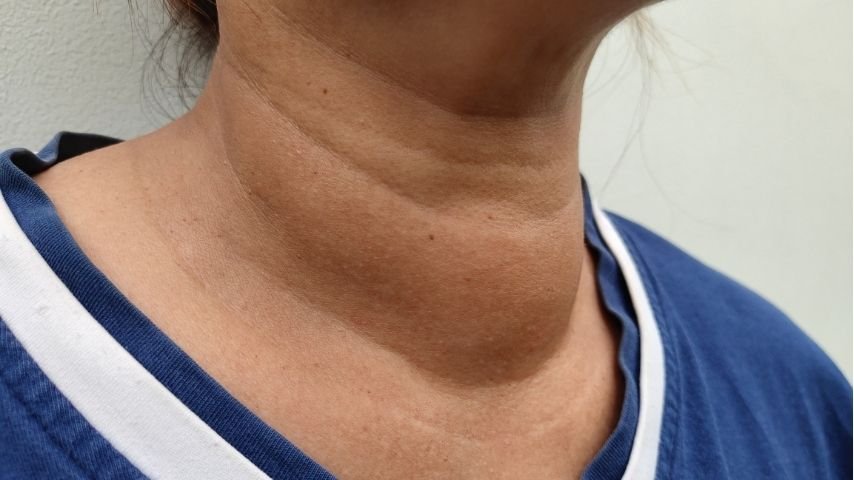
A goiter is simply an enlargement of the thyroid gland. It is not a disease by itself but a sign that something is affecting the thyroid.
The swelling happens because the gland is either working harder than usual or reacting to some imbalance in the body. This may be related to iodine levels, hormone changes, inflammation, or growths inside the thyroid.
At first, the swelling may be small and barely noticeable. Over time, it can become more visible, especially when swallowing or looking at your neck in the mirror.
Why your neck swelling may be getting bigger
When neck swelling increases gradually, it usually means the underlying cause is still active. The thyroid continues to grow because the condition affecting it has not been treated.
Iodine imbalance is one common cause. The thyroid needs iodine to function properly. If there is too little or sometimes even too much iodine, the gland may enlarge to compensate.
Another reason is thyroid nodules. These are small lumps inside the gland that can grow over time and increase the overall size of the thyroid.
Hormonal conditions can also lead to enlargement. If the thyroid is underactive or overactive, it may increase in size as it tries to adjust.
Autoimmune conditions, where the body attacks the thyroid, can also cause swelling and changes in the gland.
How to recognize if it is a goiter
Neck swelling caused by a goiter has certain characteristics. It is usually located at the front of the neck and may move when you swallow. This movement is an important sign because the thyroid is attached to structures that shift during swallowing.
The swelling tends to grow slowly rather than appearing suddenly. Many people notice changes in how their clothes fit around the neck or how necklaces sit.
In most cases, there is no pain in the early stages. This is why it is often ignored until it becomes more visible.
As it grows, it may create a feeling of pressure or fullness in the neck.
Symptoms that may come along with swelling
A goiter can exist without affecting thyroid function, but in some cases, it can change hormone levels.
If the thyroid becomes underactive, you may feel tired, gain weight, and feel cold more often.
If it becomes overactive, you may experience weight loss, a fast heartbeat, anxiety, and sweating.
Larger goiters can press on nearby structures. This may cause difficulty swallowing, breathing discomfort, or changes in voice.
These symptoms vary depending on the cause and size of the goiter.
Why many people ignore early signs
One of the main reasons people ignore neck swelling is that it develops slowly. It does not cause immediate pain or discomfort, so it does not feel urgent.
Many people assume it is weight gain or a temporary change in the body. There is also limited awareness about thyroid conditions.
Because of this, people often delay medical consultation until the swelling becomes clearly visible or starts causing discomfort.
When should you be concerned
Not every goiter is dangerous, but certain signs should not be ignored. If the swelling is increasing in size, it needs evaluation.
If you feel pressure, difficulty swallowing, or breathing issues, it is important to seek medical advice.
Any sudden change in voice or the presence of a hard lump should also be checked.
Even without symptoms, visible swelling in the neck should be evaluated by a doctor.
How doctors evaluate neck swelling
Doctors usually begin with a physical examination. They check the size of the thyroid and observe how it moves when you swallow.
Blood tests are done to measure thyroid hormone levels. This helps determine whether the gland is functioning normally.
Ultrasound imaging provides a clear view of the thyroid. It helps identify nodules, size, and structure.
In some cases, further tests may be required to understand the cause.
Where thyroid artery embolization fits as a treatment
When a goiter becomes large or starts causing symptoms, treatment may be needed. One modern option is thyroid artery embolization.
This procedure works by reducing the blood supply to the enlarged thyroid tissue. Without enough blood, the gland gradually shrinks.
Unlike surgery, it does not involve removing the thyroid. This means there are no large cuts and recovery is faster.
It is especially useful for patients who want to avoid surgery or are not suitable for it.
Emotional impact of visible neck swelling
Visible swelling in the neck can affect confidence and self-image. Many people feel uncomfortable or self-conscious when others notice it.
This emotional impact is often overlooked but is very real. Understanding that goiter is treatable can reduce anxiety and encourage early action.
Looking at the bigger picture
Neck swelling is a signal from the body that something needs attention. The thyroid is an important gland, and changes in its size should not be ignored.
Early evaluation helps identify the cause and provides more treatment options. It also prevents complications and improves long-term outcomes.
Conclusion
If your neck swelling is getting bigger, it is important to find out why. A goiter is a common cause, and it can be managed effectively when diagnosed early. Do not ignore changes in your neck. Consult a doctor, get the necessary tests, and explore treatment options like thyroid artery embolization if needed. Taking action early helps you stay in control of your health and avoid unnecessary complications.
References and Sources