






Bronchoscopy is not perceived as a painful procedure. However, some might experience mild discomfort or soreness thereafter. Sedation or anaesthesia aims to reduce pain during the procedure.
Table of Contents 
Introduction
Breathing problems, persistent cough, or unexplained changes seen on a chest scan can cause anxiety and uncertainty. When regular tests fail to provide straightforward answers, doctors may recommend a bronchoscopy to examine the airways. This process plays an important role in managing and diagnosing several lung disorders at a tender age.
At Gleneagles Hospitals, lung bronchoscopy is conducted with a strong focus on patient well-being, safety, and effective communication. It is not only used to find the cause of symptoms, but also to actively assist patients in feeling informed, reassured, and supported throughout the process.
What Is Lung Bronchoscopy?
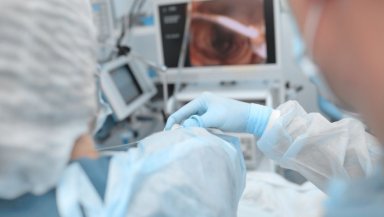
Lung bronchoscopy is a medical procedure that enables physicians to inspect the airways and the interior of the lungs using a thin, flexible bronchoscope. At the end of the tube, there is a light and a tiny camera that transmits clear pictures to a screen.
Lung bronchoscopy is a diagnostic test in which doctors can look inside the lungs and airways using a long, narrow, flexible tube called a bronchoscope. It is often employed to examine breathing issues, infections, lung masses, or abnormalities on imaging examinations that cannot be explained. Bronchoscopy is non-surgical and is minimally invasive. It provides practical details that could be used to provide proper diagnosis and treatment.
Types of Lung Bronchoscopy
Different bronchoscopy methods may be used depending on the clinical necessity.
- Flexible Bronchoscopy:
It is the most common one when a flexible tube is inserted through the airways. Generally, it is performed under local anaesthesia with a slight sedation. Doctors will use this to diagnose lung diseases, obtain tissue samples, or relieve small airway obstruction. - Rigid Bronchoscopy:
This is done through a firm straight tube, and most likely general anaesthesia is necessary. It is commonly used in cases of severe bleeding, when there are massive airway obstructions, or when foreign objects need to be removed.
The specialist explains the most appropriate approach before the procedure.
Why Is a Lung Bronchoscopy Needed?
Bronchoscopy is used to diagnose and treat various conditions of the lungs and airways. It enables physicians to have a closer look at the airways and make timely decisions where necessary.
- Diagnosing lung conditions: Assists in determining diseases which may not be readily determined by scans alone, like lung cancers, infections like tuberculosis and other diseases of the airways.
- Collecting biopsy samples: This allows physicians to obtain small tissue samples from the lungs to establish a diagnosis and devise appropriate treatment.
- Removing foreign objects: This is done to clear objects that have been accidentally inhaled into the airways, such as food particles or small objects.
- Treating airway problems: It can be used to remove growths or blockages and control blood flow in the lungs in selected cases.
By providing direct visual access to the airways, bronchoscopy helps doctors make informed decisions and avoid unnecessary treatments.
Your health matters – get expert advice today.
The Lung Bronchoscopy Procedure
A highly qualified team comprising pulmonologists, nurses, and anaesthetists performs lung bronchoscopy.
- Before the Procedure:
Before bronchoscopy, patients undergo basic tests and imaging. The doctor will describe the process, advantages, and potential risks using easily understandable language. Patients are often asked to refrain from eating or drinking for a few hours beforehand. Medications are checked, and directives are provided to ensure that safety and comfort are maintained. - During the Procedure:
Bronchoscopy is a procedure that is typically performed in a day-care setting, and patients can go home the same day. The steps generally include: - The procedure is explained, and consent is taken before changing into a hospital gown and removing personal items.
- The patient is placed at ease, and some sedation or local anaesthesia is administered to alleviate pain.
- Vital signs are monitored during the procedure, e.g., heart rate, breathing, and oxygen levels.
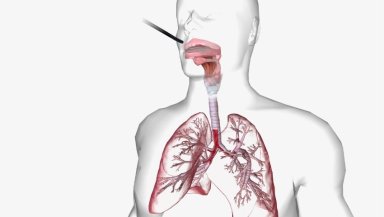
- The bronchoscope is gently passed through the nose or mouth into the airways while oxygen support is provided if needed.
- The physician checks the airways and may take a tissue sample or perform minor treatment.
- After this, the bronchoscope is withdrawn, and the patient is followed up on their recovery.
- After the Procedure:
Following bronchoscopy, patients are monitored for the impact of sedation. There may be momentary pain or coughing in the throat. Most patients can return home the same day with simple aftercare recommendations.
Recovery After Lung Bronchoscopy
The cure of bronchoscopy is not a complicated process, and recovery is usually fast. The majority of the patients feel normal after a few hours.
Common recovery guidance includes:
- Resting for the remainder of the day.
- There should be no continuous consumption of food or drink until the throat numbness subsides.
- Mild irritation or hoarseness of the throat is expected.
- Symptoms reported include fever, chest pain, and difficulty breathing.
Normal activities can usually be resumed the next day.
Possible Risks and Complications
When conducted by skilled specialists, lung bronchoscopy is a relatively safe procedure. But just as with all medical procedures, it has its risks.
Possible complications include:
Minor Bleeding: If a biopsy is performed, some slight bleeding may be noted, but it tends to haemorrhage on its own.
Infection: There is a low risk of infection, although it is rare. The doctor should be informed of any fever or worsening of symptoms.
Pneumothorax: Sometimes air escapes from the space between the lung and the chest wall, resulting in partial collapse of the lung. This might need further treatment.
Reactions to Sedation: Sedation, or anaesthesia, may cause some patients to feel dizzy, nauseous, or have other side effects.
Why Choose Gleneagles Hospitals for Lung Bronchoscopy?
Choosing the right facility for a bronchoscopy is essential for both accuracy and comfort of mind. Compassion enables Gleneagles Hospitals to combine clinical expertise with compassion.
- Experienced pulmonary specialists
- Use of safe, minimally invasive procedures.
- Clear explanations and patient education.
- Advanced diagnostic facilities.
- Pre-operative, perioperative, and post-operative assistance.
Patients are treated with dignity, transparency, and empathy at every stage.
Conclusion
Lung bronchoscopy is one of the most essential methods that help doctors diagnose and manage lung conditions more accurately and with less harm to patients. It is a safe, minimally invasive, and enlightening procedure when carried out by skilled experts. Powered by cutting-edge technology and a patient-focused mentality, Gleneagles Hospitals can provide not only accurate diagnosis and prompt treatment but also the kind and gentle support throughout the entire care journey.
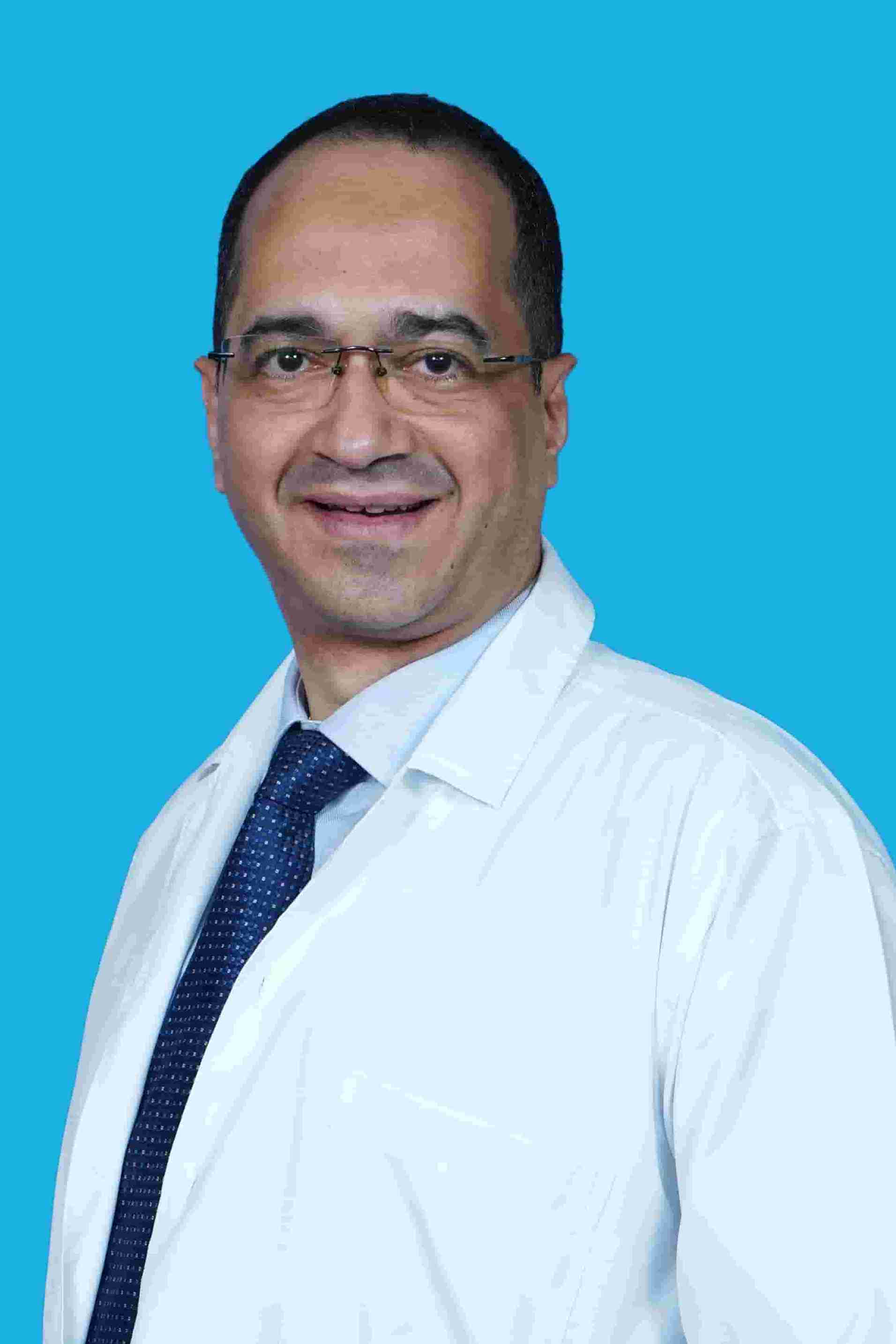

Dr Namrata Jasani
Senior Consultant
MBBS, MD Pulmonary Medicine, European Diploma in Respiratory Medicine

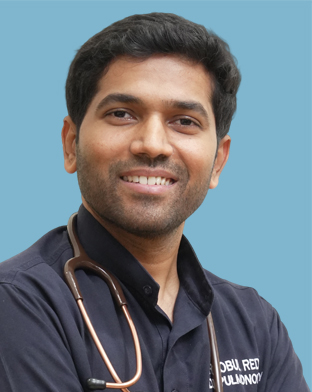
Dr Obul Reddy
Consultant Lung Transplant Physician
MBBS, MD ( Transplant Pulmonology) FICCM, EDARM(Switzerland)
Experience: 5 Years
Pulmonology, Interventional Pulmonology and Sleep Medicine
Hyderabad, Lakdi-Ka-Pul
Explore Our Blogs
View All Pulmonology, Interventional Pulmonology and Sleep Medicine
What Happens During a Navigation Bronchoscopy? Step-by-Step Guide for Patients
 Pulmonology, Interventional Pulmonology and Sleep Medicine
Robotic Bronchoscopy vs Navigation Bronchoscopy: What’s the Difference?
 Pulmonology, Interventional Pulmonology and Sleep Medicine
Navigational Bronchoscopy Explained: How Doctors Reach Small Lung Nodules Without Surgery
 Pulmonology, Interventional Pulmonology and Sleep Medicine
Navigation Bronchoscopy vs CT-Guided Lung Biopsy: Which Test Is Better for Lung Nodules?
 Pulmonology, Interventional Pulmonology and Sleep Medicine
Early Lung Cancer Detection: How Navigation Bronchoscopy Helps Diagnose Small Lung Nodules
Frequently Asked Questions
Is lung bronchoscopy painful?
How long does the procedure take?
Depending on the patient being treated and the type of treatment being performed, breathing during a bronchoscopy may take a while. The procedure usually takes between thirty and sixty minutes.
Can bronchoscopy be used to diagnose lung cancer?
The answer is yes, bronchoscopy is commonly applied as a diagnostic tool for lung cancer. Lung fluid and tissue samples are examined to determine whether cancer cells are present.
Can bronchoscopy be used in children?
Yes, bronchoscopy can be performed in children; however, it may require sedation or general anaesthesia to ensure the child does not move during the procedure.

