






The pain is generally not much because anaesthesia or sedation is given during surgery.

Table of Contents 
Introduction
Breathing is something most of us take for granted until a lung problem disrupts daily life. This can inherently be a cause of concern when scans reveal abnormalities in the lungs. Most physicians require more detailed information to obtain a clearer picture of what is occurring within the lungs. This is where a lung biopsy is relevant to diagnosis.
At Gleneagles Hospitals, the lung biopsy procedures are conducted in a careful, precise and highly patient-centred manner. The aim is to deliver direct responses without causing undue stress and to assist patients on their journey. Patients receive high-quality, human-focused care at all levels, with dedicated professionals and the latest equipment.
What Is a Lung Biopsy?
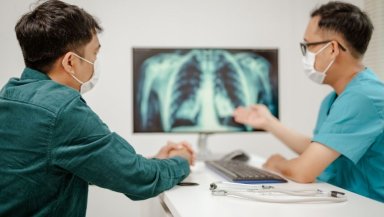
A lung biopsy is a medical procedure in which a small sample of lung tissue is collected for examination under a microscope. This sample assists the doctor in determining the exact cause of an abnormal finding observed on imaging tests, e.g. X-rays or CT scans.
A lung biopsy helps specialists determine whether the condition is caused by infection, inflammation, scarring, or cancer in the lungs. It also assists in making treatment decisions and preventing unnecessary and ineffective treatment. Although the word biopsy may seem intimidating, this procedure is conducted very frequently and with careful planning to ensure safety.
Why Is a Lung Biopsy Needed?
A lung biopsy is recommended when the doctor requires a definite answer regarding an abnormality in the lungs. It has also been frequently employed to diagnose lung diseases and to determine whether a lung mass is cancerous or non-cancerous. A biopsy is not necessary to diagnose all lung-related problems, though. In most instances, blood tests and imaging studies suffice. In cases of uncertain results or when more details are needed, a lung biopsy is a good source of information.
A lung biopsy may be recommended to:
- Research the unexplained nodules or masses in the lungs.
- Determine the cause of chronic pneumonia.
- Diagnose scarring or inflammatory lung disease.
- Rule out or confirm lung cancer.
- Examine the lung disease development of a known disease.
- Recommend the most appropriate treatment option.
By understanding the exact nature of the lung problem, doctors can offer more precise and effective care.
Types of Lung Biopsy
A lung biopsy can be performed in various ways, and the decision will depend on the location of the abnormal area, the patient's general health, and clinical needs.
Needle Lung Biopsy:
In cases of abnormal tissue formation near the chest wall, a specialist might perform a needle biopsy to collect the tissue. An individual does not require general anaesthesia to have a needle biopsy.
Bronchoscopic Biopsy:
Doctors use this procedure to take a sample of lung tissue near the airway. An expert will use a local anaesthetic, after which a camera apparatus called a bronchoscope is introduced into the lungs through the nose or mouth.
Open Biopsy:
A doctor may perform this procedure to remove a lump, either entirely or partially. The physician will order an imaging examination to identify the growth or lump. They can also insert a piece of wire or a needle into the area to provide an indication of the process.
Your health matters – get expert advice today.
Who Is the Right Candidate for a Lung Biopsy?
Lung biopsy may be recommended in cases in which the benefits are evidently more than the risks. The doctors evaluate a patient until they advise proceeding with the procedure.
It may be suitable for:
- Patients with unexplained lung abnormalities.
- Patients suspected of having lung cancer or chronic lung disease.
- Patients who continue to have symptoms during treatment.
- The individuals who require reassurance of a diagnosis before commencing therapy.
There are certain cases when a biopsy can be postponed or omitted in the presence of a serious risk of complications. Patient safety is always the top priority.
The Lung Biopsy Procedure
A lung biopsy is performed by a skilled team that may include pulmonologists, radiologists, surgeons, anaesthetists, and nursing staff.
Before the Procedure:
The preparation of a lung biopsy varies depending on the type of biopsy performed. For some types of lung biopsy procedures, one may be required to fast beforehand. The doctor may provide advice on the particular procedure a person is undergoing. To carry out the procedure safely, the patient may be advised to do blood tests and imaging studies. Some medicines, such as blood thinners, may need to be suspended. Before a physician recommends the procedure, the physician evaluates any significant factors, including allergies or pregnancy.
During the Procedure:
The biopsy may be conducted under local anaesthetic, sedative or general anaesthetic procedure, according to the procedure. Imaging guidance assists the physician in reaching the specific area without complications. The tissue sample is collected quickly, and patients are carefully monitored throughout the procedure to ensure comfort and safety.
After the Procedure:
After the biopsy, the patients are monitored for a few hours. Monitoring is done on breathing, blood pressure and oxygen levels. Other patients can be sent home the same day, whereas others might require a brief stay in the hospital.
Recovery After a Lung Biopsy
The majority of patients have no problem with recovery after a lung biopsy. There may be a temporary occurrence of mild discomfort or fatigue. Patients are typically advised to:
- Rest for the remainder of the day.
- Avoid strenuous activity for a few days.
- Follow breathing or coughing instructions provided by the care team.
- Report any chest pain, shortness of breath or fever.
Most people return to normal activities within a short period.
Possible Risks and Complications
Lung biopsy is safe, provided that the procedure is conducted by well-trained experts following contemporary techniques. Nevertheless, just like any medical practice, there are risks. Possible risks include:
- Light bleeding of the biopsy site.
- Temporary chest discomfort.
- Short-term breathlessness.
- Lung collapse, which is usually treatable
- Rare infection
At Gleneagles Hospitals, close observation and strict safety measures can reduce risks and give time to ensure proper care in the event of complications.
Why Choose Gleneagles Hospitals for a Lung Biopsy?
To get peace of mind and a proper diagnosis, it is essential to choose the right hospital where one wants to do a lung biopsy. The balanced approach provided by Gleneagles Hospitals combines knowledge and compassion.
- Experienced pulmonary and diagnostic specialists
- Safe, minimally invasive techniques.
- Effective communication and patient education.
- Advanced facilities and technology.
- Continuous post- and pre-procedure support.
Patients are treated with respect, transparency, and understanding at every stage.


Dr Namrata Jasani
Senior Consultant
MBBS, MD Pulmonary Medicine, European Diploma in Respiratory Medicine


Dr Obul Reddy
Consultant Lung Transplant Physician
MBBS, MD ( Transplant Pulmonology) FICCM, EDARM(Switzerland)
Experience: 5 Years
Pulmonology, Interventional Pulmonology and Sleep Medicine
Hyderabad, Lakdi-Ka-Pul
Explore Our Blogs
View All Pulmonology, Interventional Pulmonology and Sleep Medicine
Cryobiopsy vs Forceps Biopsy: Which Lung Biopsy Method Gives a More Accurate Diagnosis?
 Pulmonology, Interventional Pulmonology and Sleep Medicine
Is a Lung Biopsy Painful? What Patients Really Experience During a Bronchoscopy Biopsy
 Pulmonology, Interventional Pulmonology and Sleep Medicine
Recovery After Transbronchial Lung Biopsy: How Long Before You Can Work, Travel, or Exercise?
- Pulmonology, Interventional Pulmonology and Sleep Medicine
Cryobiopsy vs Forceps Biopsy: Two Modern Ways Doctors Take Lung Tissue Samples
 Pulmonology, Interventional Pulmonology and Sleep Medicine
Preparing for a Transbronchial Lung Biopsy: 10 Questions Patients Wish They Had Asked Their Doctor
 Pulmonology, Interventional Pulmonology and Sleep Medicine
Choosing the Right Hospital for Lung Biopsy: 5 Things Patients Should Look for in an Interventional Pulmonology Center
Frequently Asked Questions
Is a lung biopsy painful?
How long does it take to get results?
Results are often available within a few days, depending on the tests that are conducted.
Can I go home the same day?
Most patients can go home on the same day, but a few require brief observation.
Will I need further treatment after the biopsy?
Additional treatment is based solely on the biopsy results and may include follow-up, medication, surgery, or cancer treatment, if required.
Can a lung biopsy cause cancer to spread?
No, lung biopsies do not cause cancer to spread as long as they are done properly using modern, safe medical techniques.

